Want to be in the loop?
subscribe to
our notification
Business News
LAW OFFERS REAL ESTATE BREAKTHROUGH
“This will mean foreign invested enterprises will be allowed to own land and develop property directly, along with foreigners being allowed to own apartments and houses,” said Tizzard.
Tizzard explained that a foreign developer will be able to buy land and develop their property without having to find and negotiate a deal with a local partner, which should speed up the time taken as well as reduce the development risk of the project.
In addition, there is suddenly a huge new market for products among foreigners and Vietnamese living abroad. “With yields from property in other countries much lower than in Vietnam, foreigners will be looking closely at real estate in Vietnam, both in Hanoi and Ho Chi Minh City as well as tourist areas such as Danang and Nha Trang and perhaps other areas as the country continues to develop,” he said.
Meanwhile, Nguyet Nguyen, senior associate from Mayer Brown JSM commented that the revised law on real estate business is being hailed as providing a breakthrough for the real estate market.
According to Nguyet, one of the outstanding aspects of the revised law was to open the door for foreign organisations and individuals to purchase houses.
The revised law also allows foreign organisations and individuals to purchase constructed facilities for use as offices, production facilities, and business or service functions.
In addition, foreign-invested enterprises are also allowed to lease houses and constructed facilities for sub-leasing.
Developers of residential projects, Nguyet added, will also benefit from banks acting as guarantors on as-yet constructed properties. “If the developer fails to hand over the houses as agreed, the purchaser may request the guarantor to return the advance and other payments they have made to the investors,” she said.
“This is the first time guarantees in the sale of property have been incorporated into law. The provision is intended to ensure that developers are financially viable and greater security is provided to buyers,” she added.
In addition, the revised Law on Real Estate Business stipulates that the legal capital for real estate business not to be less than VND20 billion ($952,000), compared to the legal capital of just VND6 billion ($285,000) under the current laws.
“However, as development of a real estate project in reality requires a large investment capital, this adjustment of the legal capital is reasonable, it is the first step to identifying and sorting out financially capable investors,” she said.
Nguyet also cited that another important highlight was the right to break up larger projects into more manageable pieces. “While investors under the current laws may only assign the whole of a residential project, an industrial zone infrastructure project or a new urban project, the revised law allows an investor of a real estate project (not limited to the three above types as in the current laws) to assign the whole or part of such project to another investor for the latter’s continued investment,” she added.
However, Tizzard said that there remain problems that need to be addressed in the revised law.
These include the time taken to move and compensate those displaced by development. “Currently, it is up to the developer to negotiate with affected parties and there are no formal laws governing the amount of compensation to be paid or the timescale to move, unlike in other countries such as the UK,” Tizzard said. This creates a huge amount of uncertainty and potential cost for developers.
In addition, many developers have previously bought land with the intention of developing the land once clearance and compensation has happened (and once the property market had recovered) but were unable to continue with their developments due to delays in resettlement.
The revised laws also means that land use right fees (LUR) are now based on a market price, which basically means that the fee payable to the government to obtain the LUR certificate is a lot more than it used to be.
“Many developers bought land in the past and had a significant amount of time (normally 5 years) in which to pay these LUR fees, which they believed would be very low. However, now these fees are much higher and will mean that many development sites are unfeasible. This could lead to a lot of developers either going bankrupt or deciding against developing the land, causing further problems,” he said.
Source: VIR
Related News
MEMBER CORNER / PROMOTIONS
KNIC EXCLUSIVE GATHERING & NETWORKING 2026: A NEW MEETING POINT FOR INDUSTRIAL INVESTMENT IN HANOI
On October 2, 2026, KN Industrial City (KNIC) will host KNIC Exclusive Gathering & Networking 2026 at the National Innovation Center (NIC) in Hanoi. Building on a series of business networking and investment promotion activities in Ho Chi Minh City and Dong Nai, the event marks a new opportunity for KNIC to connect with businesses, investors, and partners in Northern Vietnam.
MEMBER CORNER / PROMOTIONS
KNIC ENGAGES WITH GOVERNMENT AND HIGH-TECH BUSINESS COMMUNITIES IN CHINA
From Beijing to Shandong, KN Holdings and KN Industrial City are continuing to expand their engagement with government authorities, trade promotion organizations, and high-tech business communities in China. In Beijing, the delegation met with the Center for International Economic and Technological Cooperation under the Ministry of Industry and Information Technology (MIIT), exchanging perspectives on industrial and technology cooperation between the two markets.

VIETNAM ECONOMY INVESTMENT
VIETNAM’S TRADE TOPS $825 BILLION BY MID-SEPTEMBER
Figures released on September 21 showed goods trade reached nearly $55 billion in the first 15 days of September alone, bringing cumulative turnover since the beginning of the year to more than $825 billion. The strong growth reflects robust trade flows, with demand for consumer goods and production inputs remaining high.

TECHNOLOGY
VIỆT NAM'S BUSINESSES MOVE TOWARDS AI AGENTS
Việt Nam’s AI landscape is entering a new phase as businesses move beyond generative AI (GenAI) tools designed to assist human users towards autonomous AI, agentic AI and AI agents that can take action with limited supervision, experts have said. The shift comes as Việt Nam seeks to accelerate science and technology, innovation and digital transformation under Politburo Resolution 57-NQ/TW, issued on December 22, 2024.
GARMENT / TEXTILE
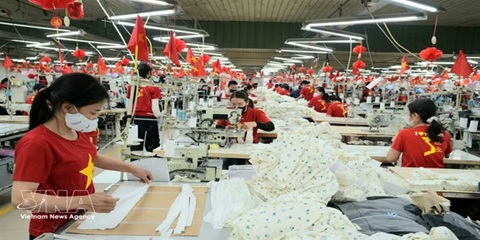
VIỆT NAM TARGETS $48 BILLION IN TEXTILE-GARMENT EXPORTS
Việt Nam’s textile and garment industry is facing both opportunities and challenges amid complex and unpredictable developments in the global market, prompting businesses to improve growth quality, optimise production costs and enhance adaptability in pursuit of an export turnover of about $48 billion this year. The target is considered an important milestone that requires concerted efforts from management agencies and the business community.
INFRASTRUCTURE / CONSTRUCTION / LOGISTIC / PORT
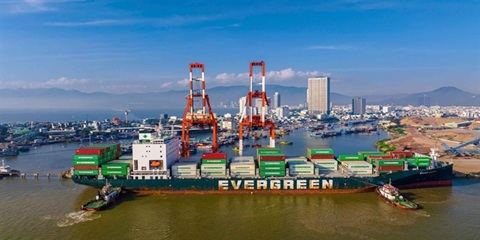
CUTTING LOGISTICS COSTS KEY TO BOOSTING EXPORTS
Reducing costs has become an increasingly urgent priority for import-export activities, particularly logistics costs, a conference in Hà Nội was told on Tuesday. According to Deputy General Director of the Ministry of Industry and Trade's Agency for Foreign Trade, Trần Thanh Hải, import-export activities has remained a bright spot for the economy in recent years, playing an important role and helping drive macroeconomic growth.
Events Sponsors






















